

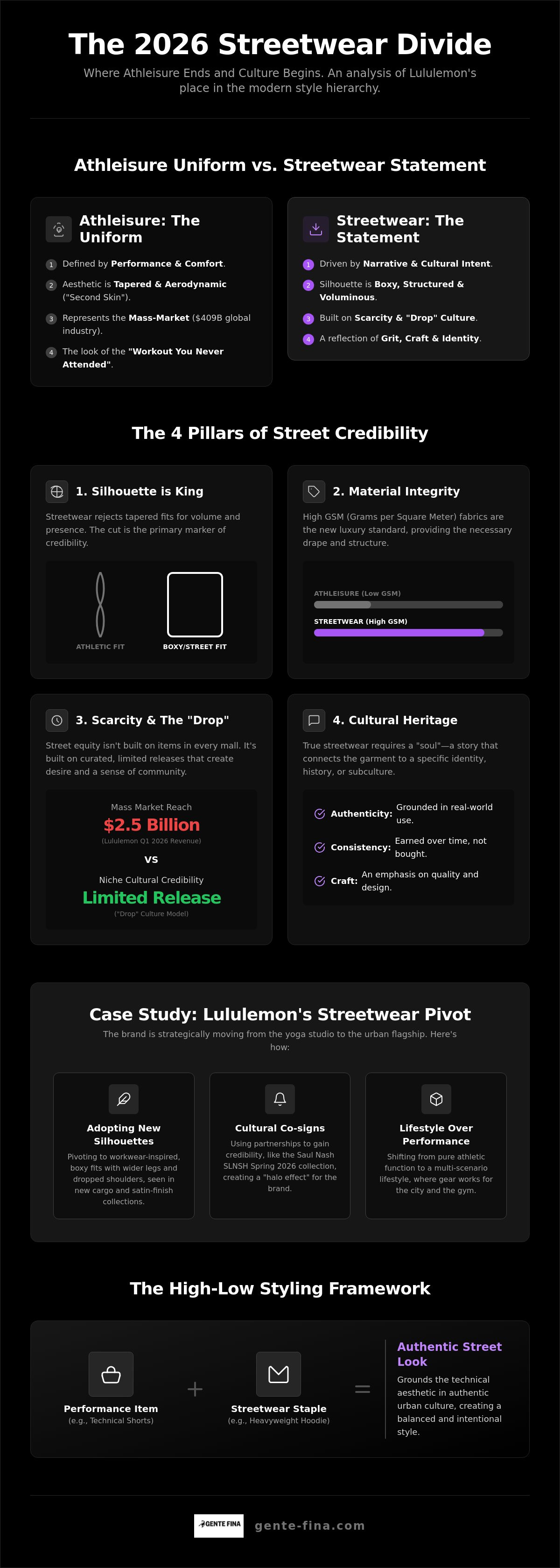
Your $118 leggings aren't a subculture. They're a uniform. In 2026, the question of whether is lululemon considered streetwear isn't about the price tag. It's about the intent behind the fit. You've likely felt that hesitation before heading out. You want the performance of technical fabrics. You fear looking "mid" or like you just finished a yoga session you never actually attended. It's a valid concern. The global athleisure market has hit $409 billion, making it harder than ever to stand out from the mass-market crowd.
We know the struggle of balancing elite comfort with a street-authentic identity. This article analyzes the shifting boundaries of modern style to see where Lululemon sits in the 2026 hierarchy. We'll look at the impact of the SLNSH Spring 2026 collection and provide a clear styling framework for your daily rotation. You'll understand why material weight and heritage now define the difference between a workout outfit and a legitimate street-ready look. It's time to validate your high-end purchases with actual cultural context.
Key Takeaways
- Streetwear in 2026 is defined by narrative and material weight. Learn how to distinguish between a basic gym uniform and a true cultural statement.
- Silhouette is the primary marker of street credibility. Understand why boxy, structured fits carry more weight than standard, mass-market athletic cuts.
- Material integrity defines the new luxury standard. Discover why high GSM fabrics are essential for achieving the drape and structure required for street style.
- We settle the debate on whether is lululemon considered streetwear by analyzing their shift toward technical collaborations and oversized silhouettes.
- Master the high-low styling framework. Learn to pair performance gear with heavyweight cotton to ground your aesthetic in authentic urban culture.
Is Lululemon Streetwear? Defining the 2026 Style Boundary
Streetwear in 2026 isn't just about what you wear. It's about why you wear it. The market has moved beyond simple logos; it now lives at the intersection of scarcity, cultural narrative, and specific, oversized silhouettes. For years, the industry debated one specific point: is lululemon considered streetwear or just high-end gym gear? The answer has shifted as the brand moves away from its pure yoga roots toward a more aggressive, relaxed aesthetic. Design language that once focused on compression now prioritizes volume and drape.
Streetwear is the intersection of grit, craft, and identity. It requires a soul that mass production often dilutes. Lululemon's recent push into their 'Streetwear Gym Wear' collections proves they're chasing this energy. We're seeing satin finishes, heavy cargos, and silhouettes that prioritize a relaxed fit over aerodynamic performance. This shift in design language forces us to re-evaluate: is lululemon considered streetwear or simply a technical upgrade to the status quo? It is a move toward a multi-scenario lifestyle where the gym is just one stop on the map.
The Athleisure vs. Streetwear Debate
Leggings are performance tools. Cargos are a statement. This is the fundamental divide. While Lululemon built an empire on the Align™ pant, those items don't carry the weight of Streetwear culture. True street style relies on the "drop" culture. It's about limited availability and a shared secret between those in the know. When you look at the category through a "Streetwear Lens," styling becomes the differentiator. A pair of technical shorts changes entirely when paired with a heavyweight hoodie and the right footwear. It's the difference between looking like a tourist and looking like you belong.
Lululemon's Market Positioning
The transition from the yoga studio to the urban flagship was inevitable. Technical apparel has become the new luxury. People want resilience. They want fabrics that survive the city and the gym. However, a premium price tag doesn't grant automatic street credibility. Credibility is earned through heritage and consistency. Lululemon is currently navigating this gap. They've mastered the performance. Now, they're attempting to inject the "soul" required to sit alongside heritage-driven labels. It's a battle between mass-market dominance and identity-driven luxury.
The Pillars of Streetwear Credibility: Silhouette and Scarcity
Silhouette is the first thing the eye catches in the city. Streetwear demands volume. It rejects the tapered, aerodynamic look of traditional yoga gear. In 2026, the question of whether is lululemon considered streetwear depends entirely on the cut. The brand is finally embracing the boxy fit, moving away from the "second skin" feel that defined the early 2010s. This transition is a key part of the evolution of modern athleisure, where structure and presence matter more than pure flexibility.
Scarcity is the other half of the equation. Street equity isn't built on items you can find in every mall. It's built on the "drop." While Lululemon's Q1 2026 revenue reached $2.5 billion, proving massive global reach, their street credibility relies on curated, limited releases. Scarcity creates desire. It turns a garment into a trophy. Without this element of exclusivity, a brand remains a commodity rather than a cultural symbol. True street style requires a sense of belonging to a niche community, something mass-market giants often struggle to maintain.
The Shift to Relaxed and Boxy Fits
Compression is for the gym. Structure is for the street. Lululemon's newer collections are pivoting toward workwear-inspired silhouettes. We're seeing wider legs and dropped shoulders. This shift acknowledges that the modern uniform needs to function across different environments without looking like a workout kit. The transition from the yoga mat to the urban environment requires a garment to hold its own shape. If you're looking for that same level of intentional structure, our Heavyweight Hoodies provide the exact boxy drape required for a high-end street aesthetic.
Collaborations and Cultural Co-signs
Partnerships are the ultimate shortcut to street status. The lululemon and Saul Nash SLNSH Spring 2026 collection, launched on April 14, 2026, is a perfect example. These 16 new products brought a designer's eye to technical performance. This "halo effect" elevates the entire brand. It suggests that the gear isn't just for sweat; it's for the culture. High-fashion crossovers provide the necessary co-sign from the gatekeepers of style. However, community-led brands often hold more power because their roots are organic. They don't need a collaboration to prove they belong; they are the culture.
Material Integrity: Why Weight Defines the 'Street' Standard
Luxury streetwear is felt before it's seen. It’s in the hands. It’s in the grit of the weave. The industry standard for street-ready apparel isn't about being light or airy. It’s about substance. In 2026, the question of whether is lululemon considered streetwear often hits a wall when we talk about fabric weight. While Lululemon built an empire on the "naked feel" of Nulu fabric, the street demands something that fights back. Heavyweight fabrics provide the drape and structure that define a high-end urban aesthetic.
Compare a standard gym shirt to a legitimate luxury staple. One is designed to disappear. The other is designed to be noticed. Streetwear relies on the "armor" effect of high-density knits. This is why our heavyweight hoodies set the bar for luxury quality; they use material that maintains its integrity through every move. It’s the difference between a garment that clings and one that hangs with intentionality. If the fabric doesn't have the weight to hold a boxy silhouette, it isn't streetwear. It’s just activewear with a higher price tag.
The Science of Heavyweight Streetwear
Density matters. In the world of premium street apparel, 400GSM (Grams per Square Meter) is the non-negotiable baseline. Anything less feels like fast fashion. This weight ensures the fabric doesn't collapse against the body. It creates the structure needed for that unapologetic, oversized look. Achieving this requires premium craftsmanship that treats the textile as a structural element. Performance light gear is for the treadmill. Streetwear heavy is for the culture. It’s a choice between temporary utility and permanent presence.
Durability and the Investment Piece
Streetwear enthusiasts value garments that age with character. They want a piece that looks better after a hundred wears than it did on the rack. This longevity comes from reinforced seams and high-density knits. These are the markers of true quality that distinguish luxury staples from disposable trends. Moving from fast fashion to durable luxury means investing in resilience. It’s about heritage and craftsmanship. A heavyweight hoodie shouldn't just survive the city; it should become part of your identity. Quality isn't a marketing claim. It’s a physical reality you can feel in every thread.
Cultural Heritage: The New 'Street' Currency
Streetwear is a vessel. It carries identity. It tells a story. In the current fashion hierarchy, the question of whether is lululemon considered streetwear often falls short because of one missing element: soul. Mass-market brands prioritize global appeal. They want to be everywhere for everyone. But true street culture is about somewhere for someone. It’s the difference between a status symbol and an identity marker. A logo might signal wealth, but a narrative signals belonging. In 2026, the market is tired of anonymous luxury. People want to know who is behind the design and what they represent.
Generic wellness is a safe bet. It’s polished. It’s corporate friendly. However, cultural heritage provides a deeper bond than any generic marketing campaign. It’s a shared history. We are seeing a massive shift toward brands that celebrate specific intersections of culture and performance. A price tag can buy a look, but it can’t buy a legacy. This shift marks the rise of the "Identity Marker." It’s about wearing your values on your sleeve. It’s about resilience and movement rooted in a specific place and time.
The "Status Symbol" is a relic of the past. It’s about looking at a price tag and feeling superior. The "Identity Marker" is the future. It’s about looking at a garment and feeling seen. Lululemon’s massive Q1 2026 revenue of $2.5 billion proves they have the status. But do they have the identity? Streetwear thrives on the fringe. It lives in the neighborhoods, not the boardrooms. When a brand scales to every mall in the world, it risks losing the very specificity that makes streetwear valuable. Authenticity is the only currency that doesn't devalue with scale.
Authenticity vs. Corporate Curation
Lived experience translates into thoughtful design. You can’t fake roots. When a brand represents a specific intersection, like Mexican heritage rooted in a distinct cultural experience, it creates a unique resonance. This isn't just about aesthetics. It’s about grit. Graphic t-shirts serve as the primary canvas for this storytelling. They aren't just clothes; they are statements of belonging. Corporate curation lacks this edge. It’s often too clean. It’s too safe for the street. Authenticity requires the willingness to be specific, even if it means not being for everyone.
Representing Your Roots
The movement is shifting toward local pride. Global anonymity is losing its luster. Streetwear status in 2026 is defined by the "designed by" narrative. People want to know the origin story. They want to know the struggle. This connection to origin is essential for building street equity. It’s why community-led brands are gaining ground. They speak the language of the street because they are the street. They don't just sell products; they lead movements. If you want a fit that carries actual weight and cultural history, shop our heritage-driven luxury apparel.
How to Style Performance Gear as Streetwear
Styling is the ultimate differentiator. It’s how you take a technical garment and give it a pulse. In 2026, is lululemon considered streetwear? The answer depends entirely on your ability to break the "catalog" look. Wearing a full matching set from a mass-market brand looks like a gym commute. To make it street, you need contrast. You need the High-Low mix. This means pairing sleek, technical fabrics with the raw, structural weight of heavy cotton. It’s about balance. It’s about grit.
The blueprint is simple. Technical fabrics need a counterweight. If your bottoms are lightweight and aerodynamic, your top should be substantial and boxy. Footwear choices ground the entire aesthetic. Avoid pure performance runners that look like they belong on a treadmill. Choose silhouettes with cultural history. Accessories finalize the narrative. A well-worn trucker hat or a canvas tote bag adds the necessary layers of "lived-in" authenticity. This intentionality transforms a workout outfit into a legitimate cultural statement.
The Essential Street-Performance Wardrobe
Start with the foundation. Our GF Performance Shorts bridge the gap between the squat rack and the sidewalk. They offer the tech you need without sacrificing the look you want. Layer these with a heavyweight hoodie to create a structural contrast that catches the eye. The weight of the hoodie provides the "street" drape, while the shorts handle the movement. Finally, use graphic tees to inject a narrative element. This turns your fit from a generic ensemble into a story about your roots and your journey.
Future Trends: Performance Meets Heritage
The future belongs to the innovators. We predict the dominance of brands that offer both technical excellence and a deep, cultural soul. The "Gym-to-Street" transition is becoming seamless because the boundaries of our lives are blurring. You shouldn't have to choose between performance and identity. Investing in pieces that offer cultural resonance and technical longevity is the move. It’s about building a rotation that survives the city and honors your heritage. Quality gear should age with you, gaining character with every mile and every "drop."
The final verdict is clear. Lululemon is streetwear if, and only if, it’s styled with intent. It provides the technical canvas, but you provide the soul. Without the right contrast and cultural markers, it remains high-end athleisure. Use the technical gear for its resilience. Use the heavyweight staples for their identity. When you mix the two, you create something unapologetic. You create a look that belongs to the street because it was built for the street.
Own the Intersection of Identity and Performance
The boundary between the gym and the street has permanently dissolved. Success in this new landscape isn't about wearing a logo; it's about the weight of your gear and the depth of your story. True streetwear requires structural integrity and cultural soul. While the question of whether is lululemon considered streetwear depends on your styling intent, the industry is moving toward brands that don't require a compromise between tech and heritage.
Look for the GSM. Demand the boxy drape. Real luxury is felt in the density of the knit and the pride of the origin. Mass-market labels offer utility, but community-led brands offer belonging. Your uniform should reflect your roots and survive your hardest training sessions without losing its shape. It's time to elevate your rotation with pieces that carry actual cultural currency and physical resilience.
Shop Gente Fina: Where Authentic Heritage Meets Luxury Performance. Our collections feature Heavyweight Premium Fabrics, are Designed with Cultural Pride, and come Engineered for Gym and Street. Wear your history. Move with purpose. The street is yours to claim.
Frequently Asked Questions
Is Lululemon considered high-end or luxury?
Lululemon is positioned as a premium technical performance brand rather than traditional luxury. Its high price points and focus on material innovation place it in the "performance luxury" category. While it doesn't share the same heritage as Parisian fashion houses, its market dominance and $118 price tags for core items like the Align™ pant command a similar level of brand status in the athletic world.
Can I wear Lululemon to a casual dinner or event?
You can wear Lululemon to social events if you prioritize structure over compression. Items like the Daydrift High-Rise Straight-Leg Trouser or relaxed-fit cargos bridge the gap between the gym and the city. The key is balance. Pair your technical bottoms with a structured, heavyweight top to ensure the look feels intentional rather than accidental. Avoid full matching sets to keep the aesthetic elevated.
What is the difference between athleisure and streetwear?
Athleisure focuses on the utility of "gym-to-life" comfort and flexibility. Streetwear is an identity-driven movement rooted in subculture, scarcity, and specific silhouettes. While athleisure often prioritizes lightweight, stretchy fabrics, streetwear demands material weight and a cultural narrative. Streetwear is a statement of belonging to a specific community; athleisure is a statement of a fast-paced, wellness-oriented lifestyle.
Why is Lululemon releasing cargo pants and satin items?
These releases are a strategic move to capture the 2026 "multi-scenario mix and match" trend. By adopting lifestyle fabrics like satin and boxy silhouettes like cargos, the brand is attempting to pivot toward the urban market. This design shift directly addresses the debate over whether is lululemon considered streetwear by incorporating the aesthetic markers traditionally found in heritage-driven street labels.
Does Lululemon have a streetwear collection?
Lululemon uses limited collaborations and specific capsules like the "Lab" to experiment with street-ready designs. The SLNSH Spring 2026 collaboration with designer Saul Nash is their most significant entry into the category. These 16 products utilize technical performance fabrics but feature the oversized, avant-garde cuts required for street credibility. These drops help the brand build necessary cultural equity outside the yoga studio.
How do I make my gym clothes look like streetwear?
Ground your technical gear with structural contrast and heavy accessories. Pair slim performance shorts or leggings with a boxy, heavyweight hoodie to create an unapologetic silhouette. Add a trucker hat or a canvas tote to break the "workout" vibe. This high-low mix signals that your fit is about style, not just sweat. It's about adding grit to the polished technical base.
Is Lululemon's quality better than other streetwear brands?
Quality is subjective and depends on the intended use of the garment. Lululemon leads in technical performance, moisture-wicking, and "second skin" comfort. However, many luxury streetwear brands offer superior material weight and durability. Streetwear enthusiasts often prefer a higher GSM fabric that drapes with more structure and ages with character. Lululemon excels in the gym, but heritage brands often win on the street.
What makes a brand 'streetwear' in 2026?
Streetwear in 2026 is defined by the intersection of scarcity, material integrity, and cultural narrative. It requires a "soul" that mass-market production often lacks. A brand must represent a specific identity or origin story to earn street equity. In this landscape, is lululemon considered streetwear or just a global commodity? The answer lies in whether the brand can maintain its niche appeal while operating at a massive global scale.